Factory Live
Tasks —Agents 5Deploy —

About

The story is really about building and rebuilding systems around obsession.

This isn't a resume. It's a chain of operating systems: curiosity, internet culture, infrastructure, competition, manufacturing, markets, and now AI. Each chapter changed the tools, but the pattern stayed the same — learn the edge of a system, then build something real inside it.

The timeline below follows the real arc: first computer, online communities, game hosting, automation, drone racing, global hardware operations, crypto infrastructure, and the autonomous factory I run today. Reinvention through systems, pressure, and relentless execution.

Experimentation, reinvention, and the refusal to build small when the system can scale.

Age 11Chapter 01

The First Computer

Curiosity started with hardware, games, and the need to understand what was behind the screen.

At 11 years old, I got my first computer and immediately wanted to know how it worked, not just how to use it. A family member had custom built the machine and walked me through the hardware, which turned curiosity into obsession.

That obsession carried straight into Warcraft, StarCraft, Diablo, CS 1.6, and Call of Duty, but the real pull was the infrastructure around the games. IRC chats, GameSpy Arcade, and early online communities made the internet feel like a living system I could join, learn, and eventually build on.
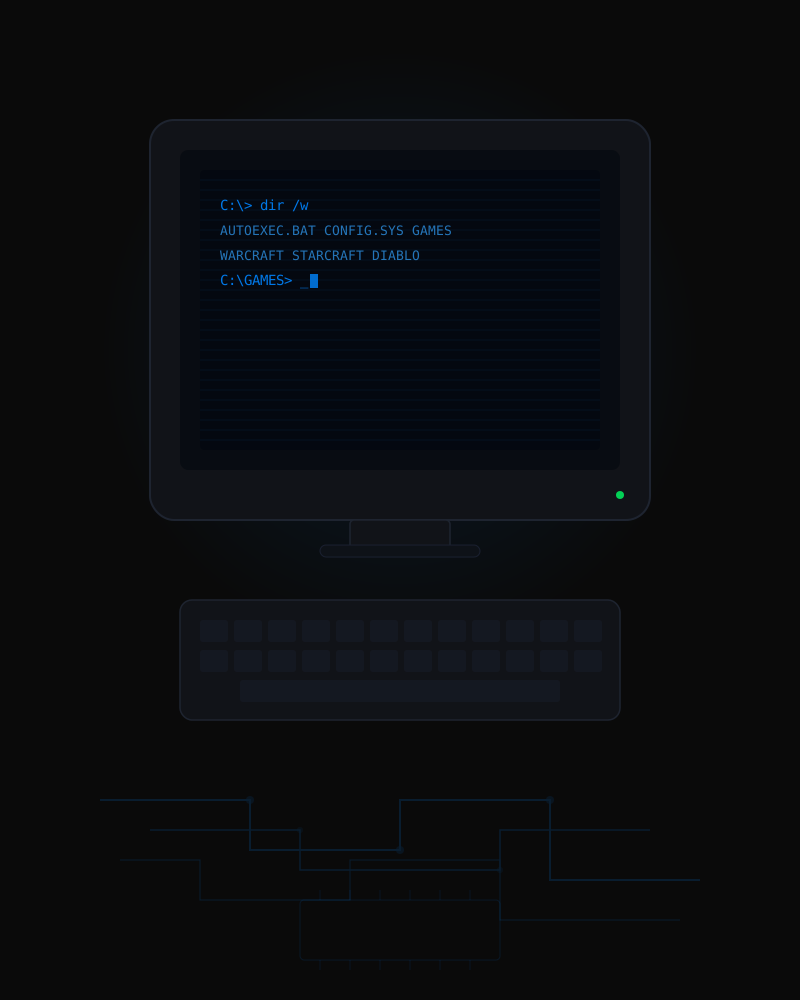
Abstract dark illustration of an early home computer and glowing interface lines.

Age 11

The machine that started everything — custom built, explained piece by piece, and never just used.
Early TeensChapter 02

IRC, Communities, and Linux

Online communities became my gateway into selling servers, learning Linux, and operating real systems.

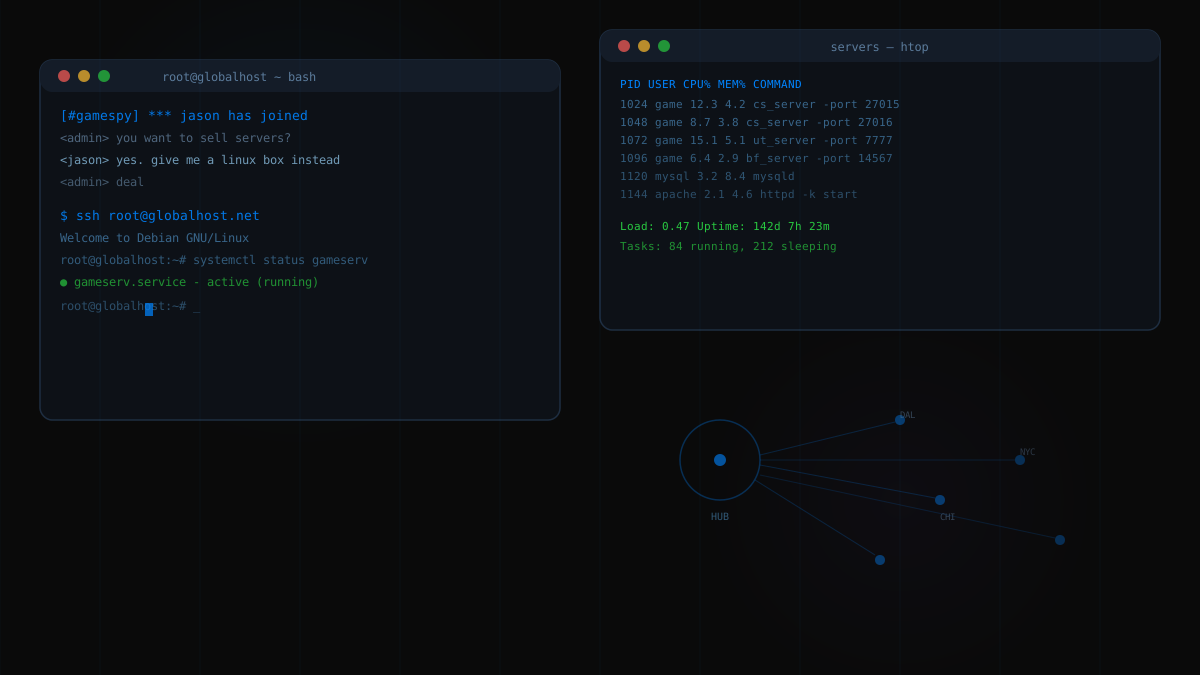
Being active in IRC and gaming communities opened the first real door. Someone noticed how involved I was and asked if I wanted to help sell game servers. I said yes, lied about my age to get the shot, and instead of taking money, asked for a Linux server.

That choice led into Global Host, where I learned how to set up, secure, and manage game servers at scale. At the same time, I taught myself web development, learned Photoshop, built gaming communities, ran sales, and started stacking infrastructure, design, and operations into one skill set.

Dark editorial network graphic inspired by IRC channels, terminal windows, and early Linux infrastructure.

Early Teens

A Linux server traded for sales work. Age 13. No credentials, no permission, just access.

Age 14–18Chapter 03

M-E-Tech, Xsessive, and North American Scale

Automation, datacenter orchestration, and a game-hosting company I helped grow to #3 in North America.

I launched M-E-Tech to automate the full hosting experience: customers could order through the website, servers were provisioned automatically across multiple datacenters in North America, credentials were delivered instantly, and everything was managed through a centralized control panel. The software worked so well I began licensing it to other hosting companies.

Around the same time I connected with the founder of Xsessive, partnered up, and started scaling hard at age 14. Over the next few years we grew into the #3 game hosting provider in North America, expanded to more than 12 locations, supported launches with Electronic Arts and Ubisoft, and merged with Server Xtreme. On my 18th birthday I finally told the truth about my age. Bad investors later forced an exit and sale of key pieces of the company — an early lesson in ownership, control, and the cost of growth without the right structure.

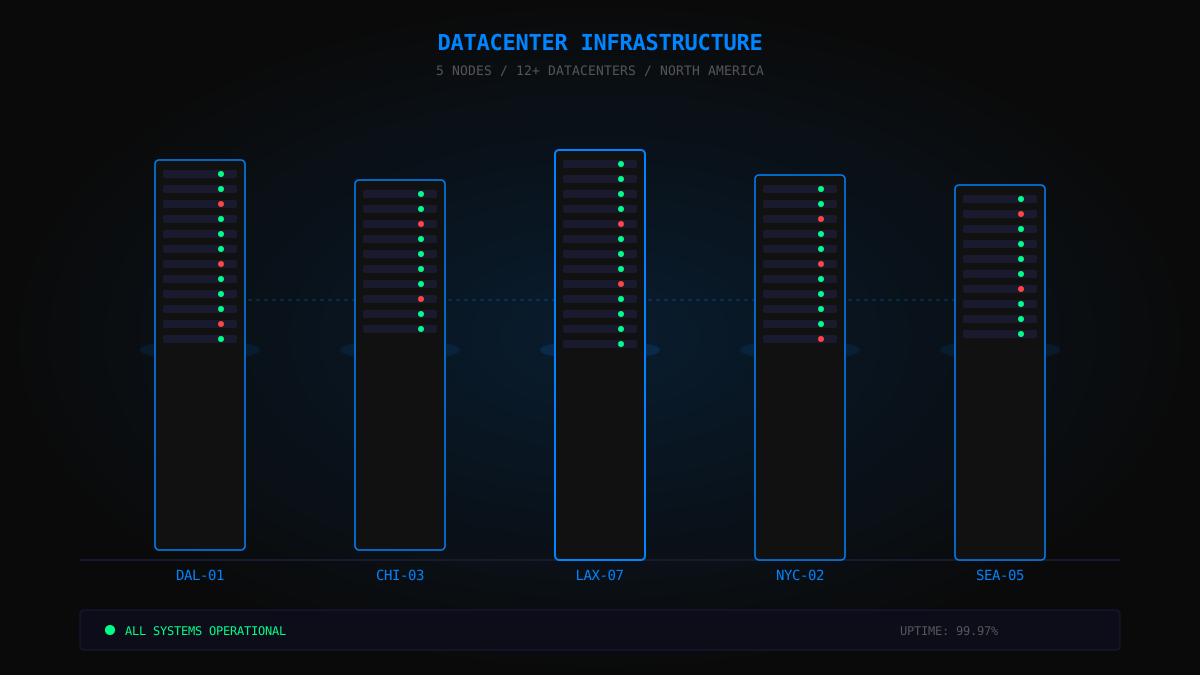
Dark infrastructure illustration showing server racks and linked hosting nodes at scale.

Age 14–18

Three datacenters became twelve. The #3 game host in North America, built before anyone knew how old he was.

System Design EraChapter 04

Automation, Admin Panels, and Xsessive Designs

After game hosting, my focus widened into business systems, custom tooling, and software that gave operators control.

After exiting hosting, I went deeper into automation and system design using PHP and MySQL to build custom admin panels, internal tools, and software that gave businesses more control over how they operated. I partnered with a local printing company and helped modernize it into a more automated business.

That work grew into Xsessive Designs, with physical locations in Montreal and Laval, combining web development, design, and automated ordering systems. During this stretch I also started an eight-year partnership with a developer I met through a freelance platform, traveling between Canada and Ukraine to build systems, solve difficult technical problems, and scale projects together.

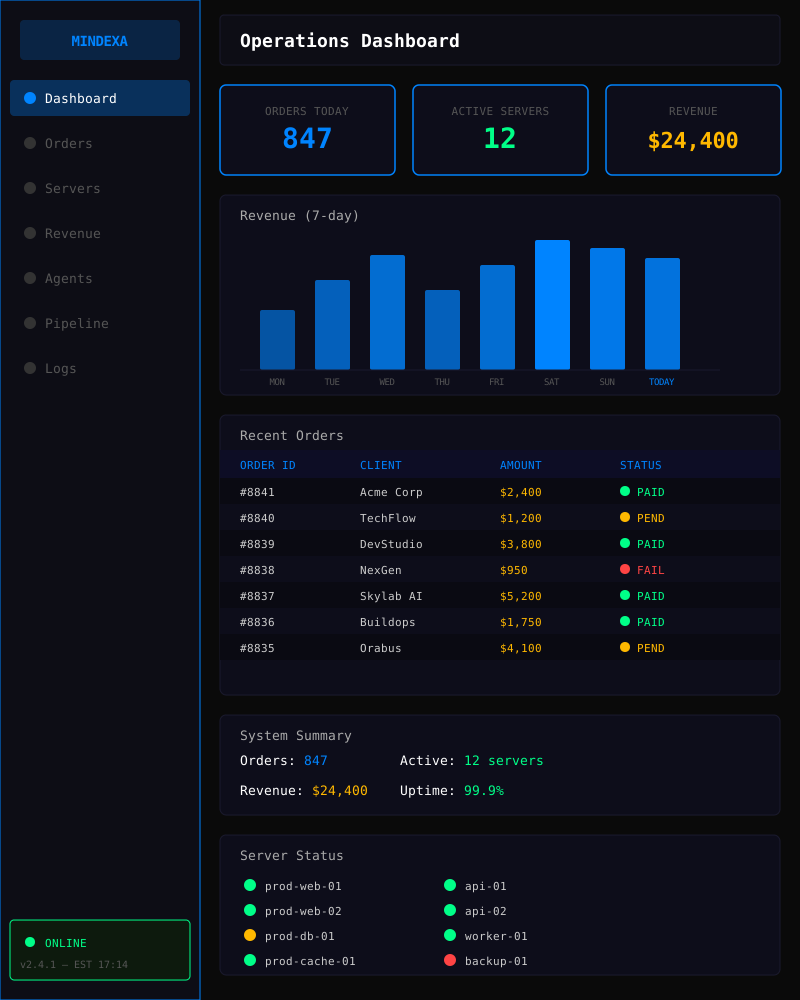
Dark interface composition of admin panels, dashboards, and automated business tooling.

System Design Era

PHP, MySQL, and an 8-year partnership that started with a 48-hour fix no one else could crack.

Competition EraChapter 05

TeenyDrones, FPV Education, and Team Canada

Hardware, retail, education, and international competition all collided in one high-speed chapter.

Through TeenyDrones, I built and scaled a consumer hardware brand in the drone space. I developed durable product lines, distributed into Costco and The Source, earned Tech Toy of the Year recognition, and turned the business into more than just product sales.

I also helped launch the first FPV drone school in Canada, helped create the first drone racing events in Canada, and managed Team Canada in international competition. A pure operator chapter: hardware, education, retail, events, and performance all running at once.

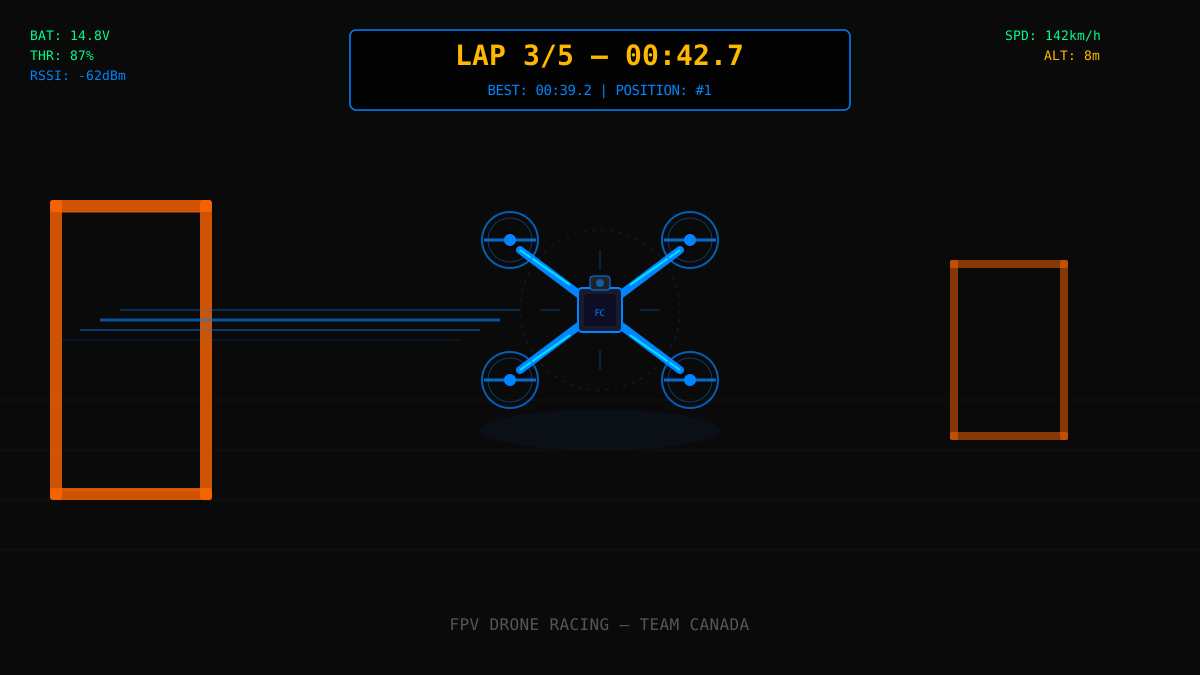
Dark FPV drone graphic with racing trajectory lines and hardware detail.

Competition Era

TeenyDrones hit Costco. Then came the first FPV school in Canada, the first race, and Team Canada.

Global ExpansionChapter 06

Global Operations and Hardware Supply Chains

Software systems expanded into factories, sourcing, and product execution across Canada, Ukraine, and China.

Jason’s work expanded into global operations, building teams across Canada, Ukraine, and China while managing development offices, product sourcing, and manufacturing relationships. He spent significant time in Asia working directly with factories and turning ideas into physical product lines.

That chapter created a rare overlap: software systems on one side, hardware supply chains on the other. It added manufacturing reality, sourcing discipline, and cross-border execution to the same operator stack that had already been shaped by hosting and automation.

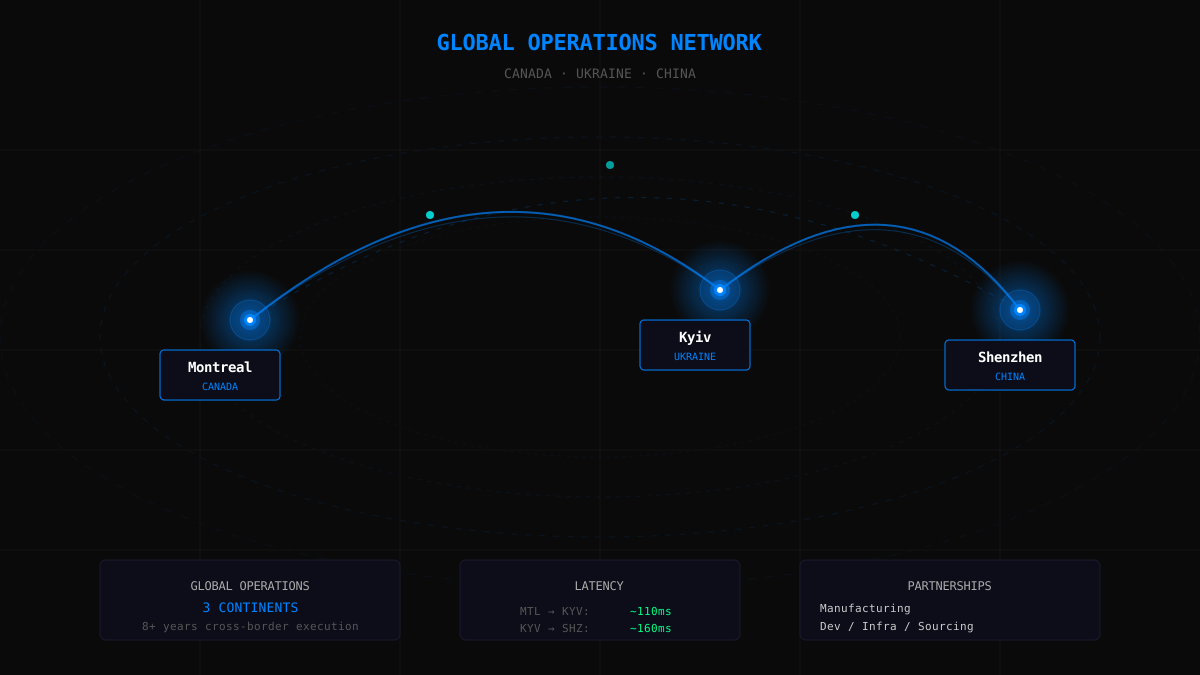
Dark global-operations illustration with connected nodes, supply routes, and a technical world map motif.

Global Expansion

Factories in Shenzhen, teams in Kyiv, operations in Montreal. Hardware sourced from the floor up.

Systems and RiskChapter 07

Crypto Infrastructure

Mining farms, energy optimization, and large-scale compute operations across North America.

Before AI infrastructure, I moved into crypto mining systems and helped design, build, and operate large-scale mining farms across North America. The work was intensely operational: rack density, thermal realities, uptime, deployment logistics, and the economics of distributed compute.

I also consulted on projects in the United States, deepening my understanding of energy optimization, infrastructure efficiency, and how to run high-load systems where weak assumptions get punished fast.

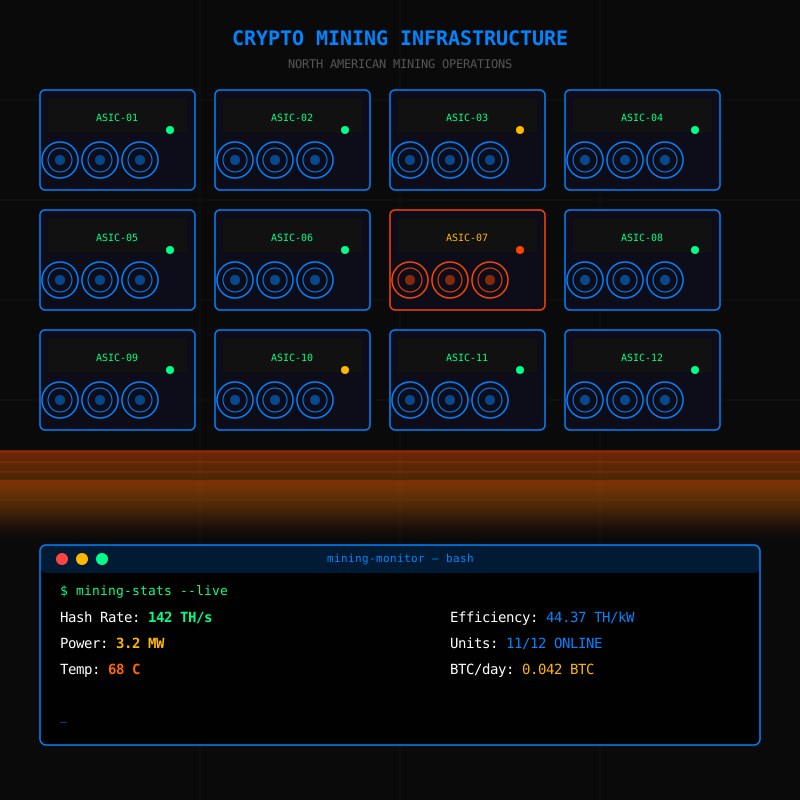
Dark compute-rack illustration representing crypto mining farms and dense infrastructure.

Systems and Risk

Mining farms built from scratch across North America. Energy, heat, uptime, and distributed compute at scale.

NowChapter 08

The AI Infrastructure Factory

The autonomous execution environment I built around agents, memory, orchestration, and continuous output.

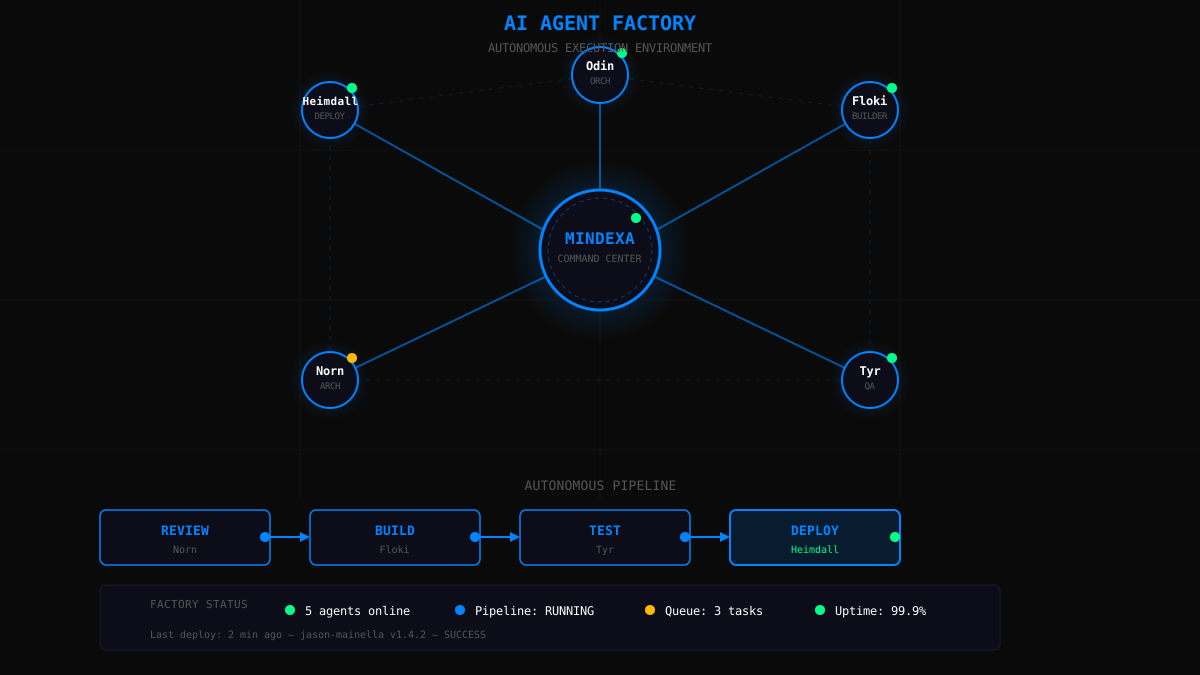
Today I design and operate an autonomous factory built to replace manual workflows, orchestrate specialized agents, deploy systems continuously, and improve over time. Mindexa sits at the core as the evolving intelligence layer, with Odin, Floki, Tyr, Norn, and Heimdall turning missions into a live execution pipeline.

This chapter pulls every prior one together: hosting taught infrastructure, automation taught leverage, drones taught performance, hardware taught execution, and crypto taught systems under load. The philosophy is simple and earned — building systems that build systems — because most people use AI, and I operate it.

Dark AI orchestration diagram with connected agent nodes and a central execution core.

Now

Odin, Floki, Tyr, Norn, Heimdall. An autonomous pipeline that builds, tests, deploys, and improves without stopping.